For example
"Product is covered by warranty. Customer has high priority. Send a replacement product immediately and include a return label."
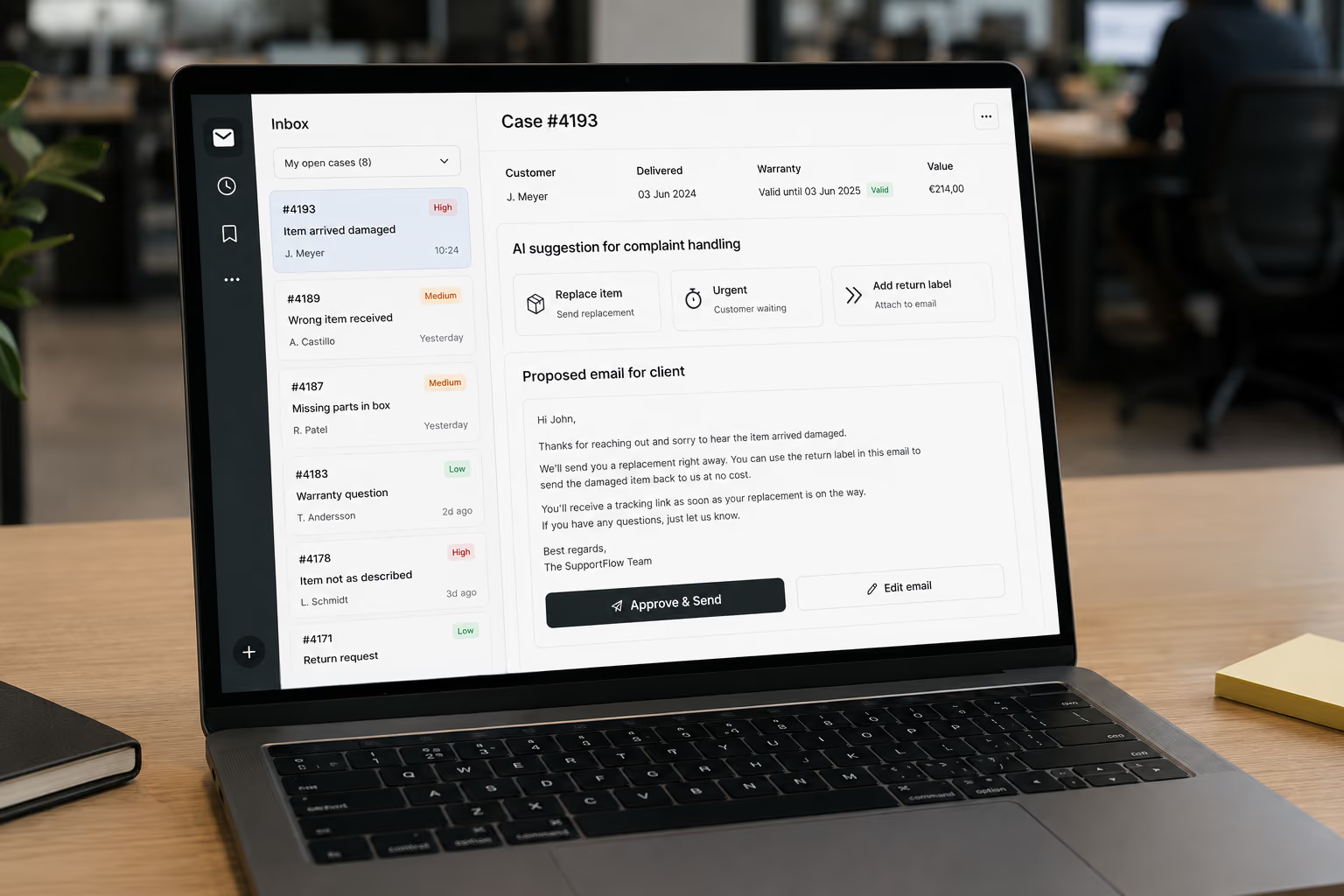
All the information is then displayed in a Mendix application specifically developed for the service team.
The employee sees everything in one overview:

The original email

The AI analysis

The recommended next steps
The relevant order details
The proposed response
The service employee reviews the proposal, adjusts it if necessary and then sends the response.
The power of Mendix: a business application in days, not months
1. Faster response times
Where employees previously spent 20 minutes searching for information, switching between systems and drafting a response, the process now takes less than a minute.
The complaint is already fully prepared before an employee starts working on it.
The result:

Customers receive a faster response

The same service team can handle significantly more complaints.
2. No more disconnected systems
Employees no longer need to switch between email, ERP, CRM and other systems. All relevant information is automatically brought together in one clear overview.
This not only saves time, but also reduces errors and makes it easier to onboard new colleagues quickly.
3. More insight and control
Every complaint is automatically recorded as a structured case with status, history, responsible emploeyee and outcome.
This creates valuable management information, such as:
How many complaints are coming in?

Which products are they about?

How quickly are complaints resolved?

Where are structural problems occurring?
Information that was previously scattered across mailboxes and separate systems suddenly becomes fully transparent.
4. The employee stays in control
AI does not make decisions. Instead, it supports employees by gathering information, performing analyses and making recommendations. The final decision always remains with the service employee. This keeps the process reliable, controllable and compliant.
Why Mendix?
AI and data only create value when employees can easily work with them. That’s why we developed the user interface in Mendix. The application fully aligns with the service employees’ workflow and includes, among other things:

A clear dashboard.

One screen with all relevant information.

Actions that fit the service team’s daily way of working.
AI and Lobster are seamlessly integrated into the same application.
The major advantage of Mendix is that the software adapts to the business process, rather than the other way around.
Need to add an extra status? Change the prioritization? Or connect an additional system? These changes can often be implemented within just a few hours.
Why Lobster?
A solution like this stands or falls with integration.Mailboxes, ERP systems, AI models and business applications all speak their own language.
Lobster acts as the central integration platform connecting all these systems. In this demo, Lobster takes care of, among other things:
Reading the mailbox
Communicating with the AI model

Retrieving order data from the ERP system

Sending all information to the Mendix application
Everything is configured without the need for high-code development.
Thanks to support for modern standards such as MCP, AI agents can also be integrated safely and in a manageable way into the existing application landscape. Instead of separate point-to-point integrations, you get one central platform where all data flows are visible and manageable.
From demo to practice
This demo was deliberately kept simple to show what is already possible today. The same approach can be applied to many other business processes.
The technology is ready. The question is no longer whether AI can strengthen your processes, but where you start.
Curious what this could look like in your organization? We'd be happy to show you the demo live.
For example:
Order processing

Invoice processing
Supplier inquiries

Internal service desks

Warranty claims

Returns
Anywhere information from multiple systems needs to be brought together and employees need to make decisions, AI combined with Lobster and Mendix can deliver a significant efficiency boost.
The question is no longer whether AI can enhance your processes, but where (and when) you should start.
Curious what this could mean for your organization?
We’d be happy to show you how this solution works and explore the possibilities for your organization together.